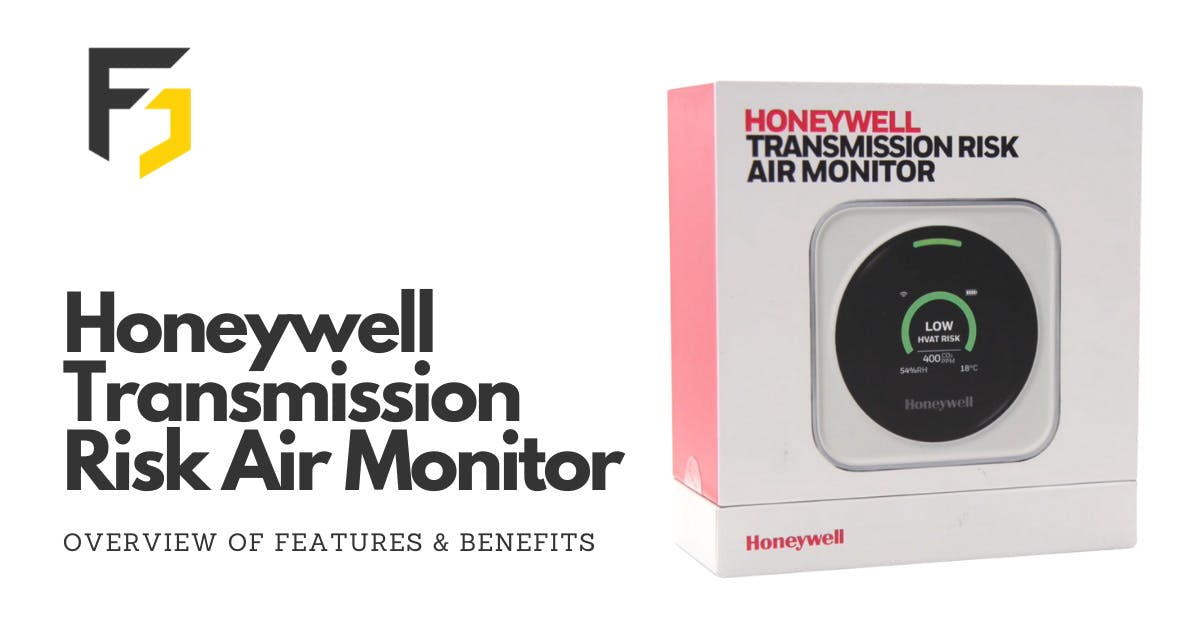


Honeywell Transmission Risk Air Monitor
Honeywell has introduced the Transmission Risk Air Monitor as a cost-effective solution to reduce the risk of exposure to any airborne viral transmission*. This can be used in places such as schools and universities classrooms, restaurant and café settings and any other small-to-medium-sized buildings.
Honeywell Transmission Risk Air Monitor Version 2 Available Here.
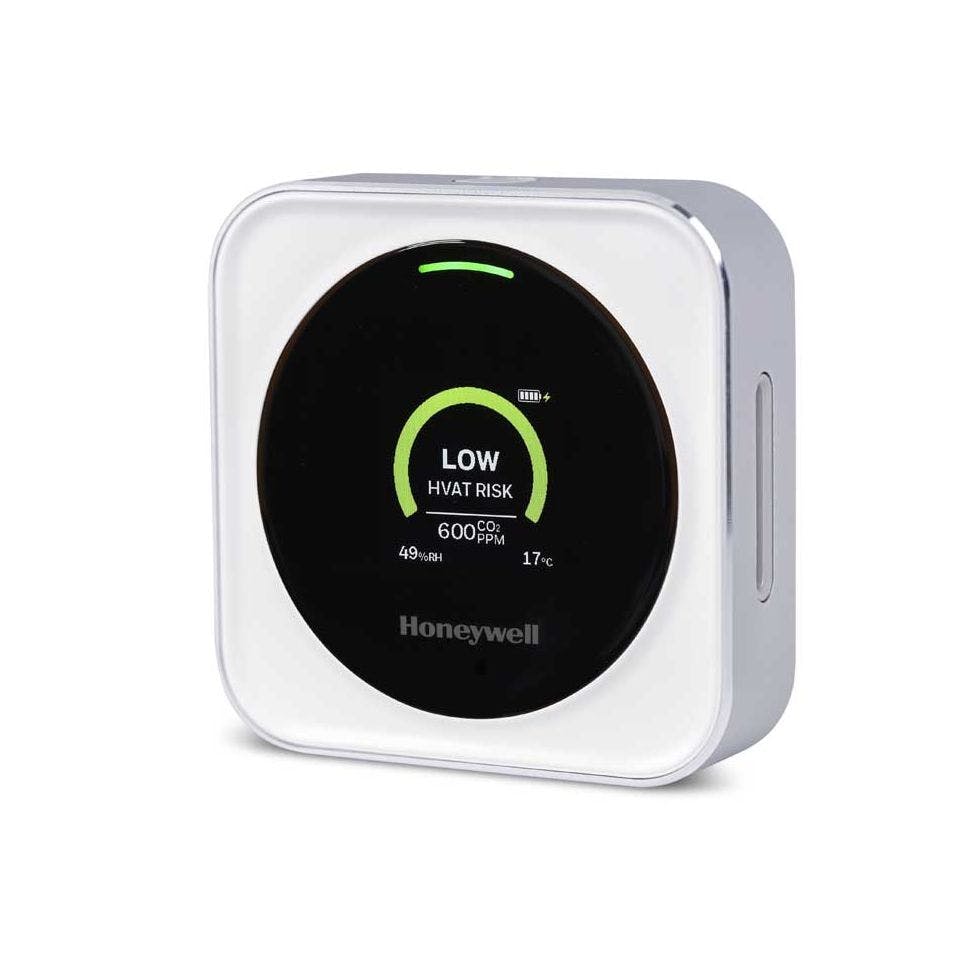
The Honeywell Transmission Risk Air Monitor (HTRAM) observes carbon dioxide (CO2) levels and considers some user-controlled settings (like the type of human activity present*) to alert users when there is a high risk of transmission. This is a real-time monitor.
A traffic light system of red, yellow and green is used to easily identify the current conditions. A sound alarm will also make users aware if the risk of airborne transmissions (based on detectable CO2 levels) have increased.
The HTRAM has three pre-programmed settings to identify what type of indoor setting the monitor is being used. These are low, medium and high activity. Examples of each type of activity can be found below. High activity settings for areas such as a gym, arenas or community centres are recommended for coverage of approximately 800-1000 square feet.
Honeywell has used guidance from research by the University of Colorado and combined this with Honeywell algorithms to determine typical air quality conditions. This includes factors such as the average size of a room, the number of people in it, a typical breathing rate and the duration of occupancy.
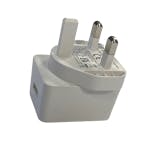
- Transmission Risk Air Monitor comes as standard with a USB charger and manual
- A separate AC adapter can be purchased separately for more convenient charging
- Lightweight design and can be easily mounted or carried
- 10-hour battery time so ideal for an average working/school day before it needs charged
|
What’s in the box? |
Transmission risk air monitor , USB charger and Manual |
|
Weight & Dimensions |
· 150g · 80 mm × 80 mm × 22 mm · [3.1 in × 3.1 in × 0.87 in] |
|
Detection Range |
CO2 (NDIR) - 400 ppm to 2000 ppm, up to 10,000 ppm extended range |
|
Housing Materials |
Aluminum alloy and plastic |
|
Display |
TFT |
|
Input Voltage |
5V |
|
Input Current |
1A |
|
Battery |
· Lithium-ion rechargeable battery · 10-hour battery time · 2600 mAh capacity · USB Port – micro USB |
|
Temperature & Humidity |
Operating - 0°C to 40°C, 0% RH to 90% RH Sensor - -20°C to 60°C or -4°F to 140°F, 0% RH to 100% RH |
|
|
*The Honeywell Transmission Risk Air Monitor (HTRAM) analyzes specific air quality conditions and alerts the user when conditions are present that may increase the risk of exposure to airborne viral transmission. It does not prevent or reduce virus transmission nor mitigate viruses that may be present, nor does it detect or warn against the presence of any virus, including but not limited to COVID-19. The HTRAM does not repel or destroy any microorganism, viruses, bacteria, or germs. Please refer to and read the datasheet for more terms and conditions on the Honeywell Transmission Risk Air Monitor, available in our downloads section above. |